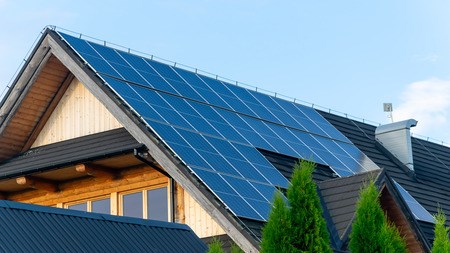
Solar water heating research by The Pew Charitable Trust into the green economy in North America shows that, despite minimal investment, the emerging clean energy economy in that country has grown considerably and in doing so, has engaged a wide variety of workers and generated new industries.
Indeed, in California, jobs in the green sector grew over three times faster than total employment in California in 2009. The rate of growth of green jobs in that state has been similar to that of software jobs since 2005.
Irvan Damon, who previously represented the Sustainable Energy Society of Southern Africa (SESSA) says Government’s green economy drive coincides with the ‘green collar’ job sentiments expressed by The Pew Charitable Trust. In 2011 Zuma announced: “Research has indicated that we can create jobs in six priority areas. These are infrastructure development, agriculture, mining and beneficiation, manufacturing, the green economy and tourism. We cannot create these jobs alone. We have to work with business, labour and the community constituencies.”
Damon agrees with Zuma. He believes that the green economy should not stand alone but rather be integrated into the other five sectors mentioned. “Zuma’s remarks have highlighted the green economy as a priority area and put it firmly on the national agenda,” says Damon. “Between 1998 and 2007, green jobs grew at a faster rate than overall jobs; that’s 9.1 percent versus 3.7 percent.
“Locally, Eskom’s solar geyser rebate programme has already created many permanent green collar jobs since it started in 2008 and will have created many more by 2013/14 as it approaches its target of having installed one million solar water heating systems.”
Lending credence to Damon’s comments are the findings of the University of Massachusetts. According to the university, clean-energy investments create more job opportunities than spending on fossil fuels, across all levels of skill and education. In fact, they concluded that the largest benefits will accrue to workers with relatively low educational credentials.
Additionally, the research and analysis presented in the university’s report - ‘How Clean Energy Policies Can Fight Poverty and Raise Living Standards in the United States’ - showed that a high proportion of the jobs generated by clean-energy investments should offer good opportunities for advancement through training programs and that newly employed low-income workers will find new opportunities to uplift themselves and their families out of poverty.
Damon adds that specifically, of the 1,7 million net increase in job creation spurred by clean-energy investments of about $150 billion in America per year, roughly 870 000 of the newly available jobs would be accessible to workers with high school degrees or less.
“That’s good news for South Africa where, according to Stats SA, 4, 1 million people were unemployed at the end of 2010 which equates to about 24 percent of the country’s total population. It’s particularly good news for South Africa’s youth who, says trade union Solidarity, will join the ranks of the unemployed at a rate of six for every 10 matriculants in 2011.
“It’s a no-brainer and ‘solar makes cents’. South Africa needs jobs; the green economy is delivering them ahead of other sectors in many countries around the world. Let’s replicate that success here by investing in the green economy. More to the point, South Africa must embrace another form of empowerment, that of ‘green economic empowerment’.”
Damon explains that this type of economic empowerment will create green collar jobs which will ensure South Africa can become more competitive in the low carbon technology and services sector, whilst supporting the country’s low-carbon growth trajectory. He says that green collar jobs also play a key role in supporting South Africa’s commitment of reducing the country’s carbon footprint by 34 percent by 2020 which was announced at Copenhagen in 2009.
He adds that Government should mandate a minimal set of greening skills and technology and that where developers and contractors have prioritised green skills and low carbon technologies, like solar water heating for instance, these entities should be rewarded and bumped up the tender process.
“But, you needn’t take my word for it. The green economy – or green collar job creation – has attracted the attention of South Africa’s Economic Development Minister, Ebrahim Patel who unveiled a R25bn green orientated investment by the Industrial Development Corporation (IDC) in 2011. This investment should create tens of thousands of green collar jobs over the next five years and go a long way to delivering on Government’s jobs promise,” concludes Damon.