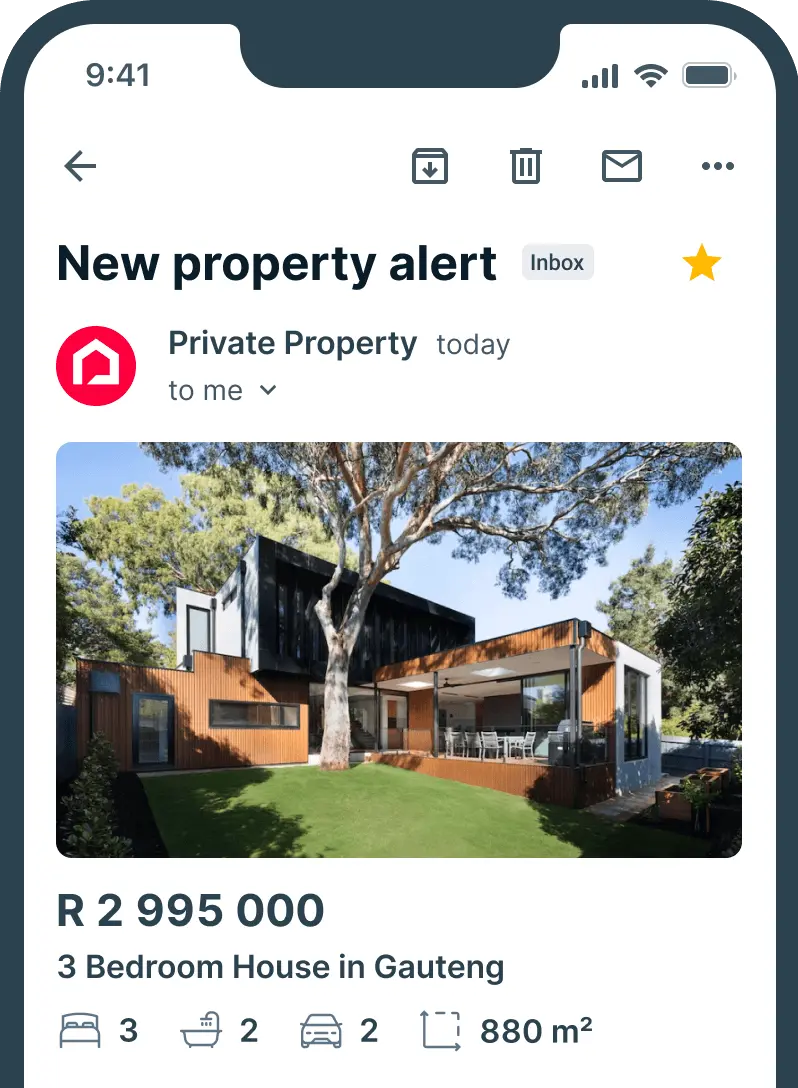
The first thing you should know is that property listings do not generally tell you when the house first went to market. A house can appear as a new listing, but it may just be that its price was adjusted, there are new photographs or a reference number, or the house was taken off the market for a time but is back up for sale.
We asked Yolanda Schubert, Director & Business Manager, RainMaker powered by RealNet, why it is important to know how long the seller has been trying to sell.
Q: Why should buyers know how long a property has actually been on the market?
It gives buyers some context around the property. If a property has been on the market for a long time, it is worth understanding why. However, I would caution buyers not to put too much emphasis on the number of days alone. The time on the market is only one part of the bigger picture and doesn't necessarily tell you whether the property is a good or bad investment.
Q: Does this knowledge give a buyer negotiating power, and why?
It can. If a property has been on the market for an extended period, particularly if there have been one or more price reductions, it may indicate that the original asking price was not supported by the market. That can give a buyer an opportunity to negotiate. But do not assume that a property that has been on the market for a long time automatically means the seller is desperate or will accept a very low offer. The seller's circumstances and the property's actual market value are much more important.
Q: Should this be the first question to ask the agent when making an enquiry?
Not necessarily. I think the first question should be whether the property suits your needs and whether the asking price is realistic compared with similar properties. Once a buyer is seriously interested, it is perfectly reasonable to ask the agent how long the property has been on the market and whether it has been marketed previously. I would also encourage buyers to ask whether there have been any previous offers and, if so, whether they were unsuccessful because of price, conditions, or something else.
Q: What is considered "a long time"?
It depends on the area, the type of property, and the price range. In a fast-moving market, three months could be considered a relatively long time. For a specialised property, luxury home, or a property in a slower market, six months or even longer may not be unusual. I think the better question is: How long has it been on the market compared with similar properties in that particular area and price bracket?
Q: Does a long time usually mean a red flag?
Not at all. There are many perfectly good properties that take longer to sell. It could be a unique property that appeals to a smaller group of buyers, a luxury property, or simply a property where the seller is not under pressure to sell. Sometimes a buyer may also be looking for something very specific, and a property can sit on the market until the right buyer comes along. I wouldn't regard time on the market as a red flag. I would regard it as a reason to ask more questions.
Q: What words in a listing description may indicate that this is not the first time the property has been marketed?
There are certain phrases that can give you a clue, such as "price reduced" or "urgent sale". A price reduction is probably one of the clearest indications that the property has been marketed previously at a higher price. But again, these terms don't necessarily tell you how long the property has actually been available for sale.
Q: Is there a way for buyers to check listing dates without asking an agent?
Buyers can certainly do their own research. Private Property shows the listing date associated with the online advertisement, but this does not necessarily represent the property's complete cumulative marketing history. A price reduction doesn't necessarily mean the property is "new to the market", but a property that is withdrawn and subsequently relisted can make the online history more difficult to establish.
Q: Why should buyers not judge a property by its time on the market?
The number of days doesn't tell you the story behind those days. A property may have been overpriced initially and subsequently corrected. Or it may be correctly priced but appeal to a very small group of buyers. There are also properties where the seller is simply not motivated to sell quickly. Rather than saying, "This house has been on the market for six months, so there must be something wrong with it," I would say: "This house has been on the market for six months – let me find out why." That is a much better approach.
Q: Generally, what are the major reasons why a house stays on the market longer than similar properties in the same area?
In my experience, price is a factor. Sellers sometimes have an emotional attachment to their property or have a particular amount they need from the sale, but the market ultimately determines what buyers are prepared to pay.
Other reasons can include:
- The property is overpriced compared with recent comparable sales.
- Sellers overcapitalised.
- The seller's expectations don't align with the current market.
- The property needs maintenance or renovation.
- The presentation or marketing isn't attracting buyers.
- The property has unusual features that appeal to a smaller buyer pool.
- There are location-related issues such as traffic, noise, or position.
- There may be zoning, municipal, sectional-title, or other legal considerations.
- The property may be difficult for buyers to finance.
- The seller may not be genuinely motivated to sell.
- The particular property type or price bracket may simply be moving slower.
- The property may have become overexposed after being marketed for a long period without changing the price, presentation or marketing strategy.
Takeaway: I caution buyers against thinking that "long on the market means a bargain." The more important questions are: “Why has it been on the market for so long?”, “Is the current asking price supported by comparable sales?” and “has anything changed since it was first marketed?”.
An experienced property practitioner should be able to help a buyer answer those questions and put the property's marketing history into perspective. Ultimately, buyers should look at the property, the market and the comparable sales, rather than simply the number of days the property has been advertised.