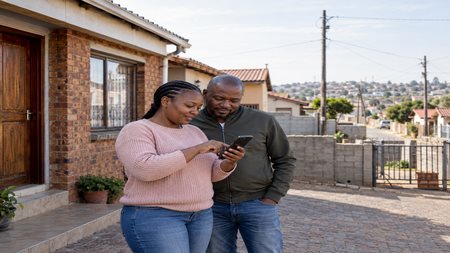
Over time women’s influence in the property market has evolved significantly, and for many reasons. They have challenged legal barriers and succeeded; they have gained recognition as a gender that had been largely ignored; they have advocated successfully to be acknowledged as equal in the job market; and in SA’s property sector they now own more or co-own more than half of our residential properties.
Ownership:
BetterBond’s National Head of Sales, Brad Dendall, says, “Almost 70% of all homeowners in South Africa are women—either buying property on their own or jointly with men—with more opting to do so alone than ever before.” Furthermore, among those women applying for home loans, it is buyers under the age of 40 who are leading the charge.
“BetterBond’s data shows that the percentage of home loan applications submitted by women has climbed from 36% in 2016 to nearly 42% a decade later,” says Bendall. “What’s particularly noteworthy is that younger women lead the way when it comes to applying for a bond.”
Solo buying trends:
There has been a 2.4% increase in the proportion of women-headed households in 2024, up from the 40% reported in the 2023 General Household Survey. Property is increasingly viewed by women as a long-term investment for themselves and their families, explains Bendall. “Women often have to take control of their family’s financial planning and security, and this tends to involve homeownership.”
Lightstone reports that single women far outnumber men as buyers in the under-R250 000 market. This dominance continues through properties priced up to R1 million.
Driving the township market
Women in their thirties are the major drivers of the traditional township market, according to BetterBond. Data for January to May 2024 highlights that 55% of all home buyers in traditional townships such as Protea Glen in Soweto, Soshanguve north of Pretoria, and Mitchell’s Plain in Cape Town were women, with just over half between the ages of 30 and 39, recording the most transactions of more than R1-million.
SA’s township economy is estimated to be worth approximately R100-billion annually, serving as hubs of entrepreneurial activity and innovation. As noted in an article on township economies in South African Business Integrator, “the purchasing power within townships is substantial, with estimates suggesting a consumer market worth billions.”
This makes the township property market an exciting investment opportunity, notes Bendall. “As suburbs in traditional townships burgeon to offer a range of affordable property options as well as access to an array of formal and informal economic opportunities, there’s been renewed demand for homes in these areas.”
Future security
Lew Geffen Sotheby's International Realty in South Africa CEO Yael Geffen says, "Women aren't just buying homes; they're securing their futures. With longer life expectancies and nearly half of marriages ending in divorce, property ownership has become a critical form of empowerment.
“The days of women being sidelined in property decisions are over. They’re not just buying homes; they’re building legacies. And that’s a trend that’s only going to grow.”
Industry analysts predict that by 2030, women will buy 70% of homes due to the growing trend of remote work. “What we're witnessing isn't a trend—it's a permanent rebalancing of power in real estate.”
Women’s choices
Women buyers tend to favour properties or developments that offer secure living, and solo women buyers account for the lion’s share of sectional title sales, at 37%, notes Lightstone. Those who can also seek homes in estates with controlled access. Lightstone reports that solo women buyers account for almost 12% of freehold home sales within estates, spending on average nearly R2.2-million for these homes. Just over 4% of the buyers of sectional title sales in estates are women. On average, they spend around R1.5-million for these lock-up-and-go properties within a safe environment.
It’s evident that women are no longer a growing force in the property market; they are the driving force, says Bendall. “They are taking ownership of their financial futures through property. Women are not just buying homes—they are reshaping the market.”