1 745.8 ha Farm in Graaff-Reinet Outlying
Historical homestead, twin cascades & endless mountain vistas....
SOLE MANDATE
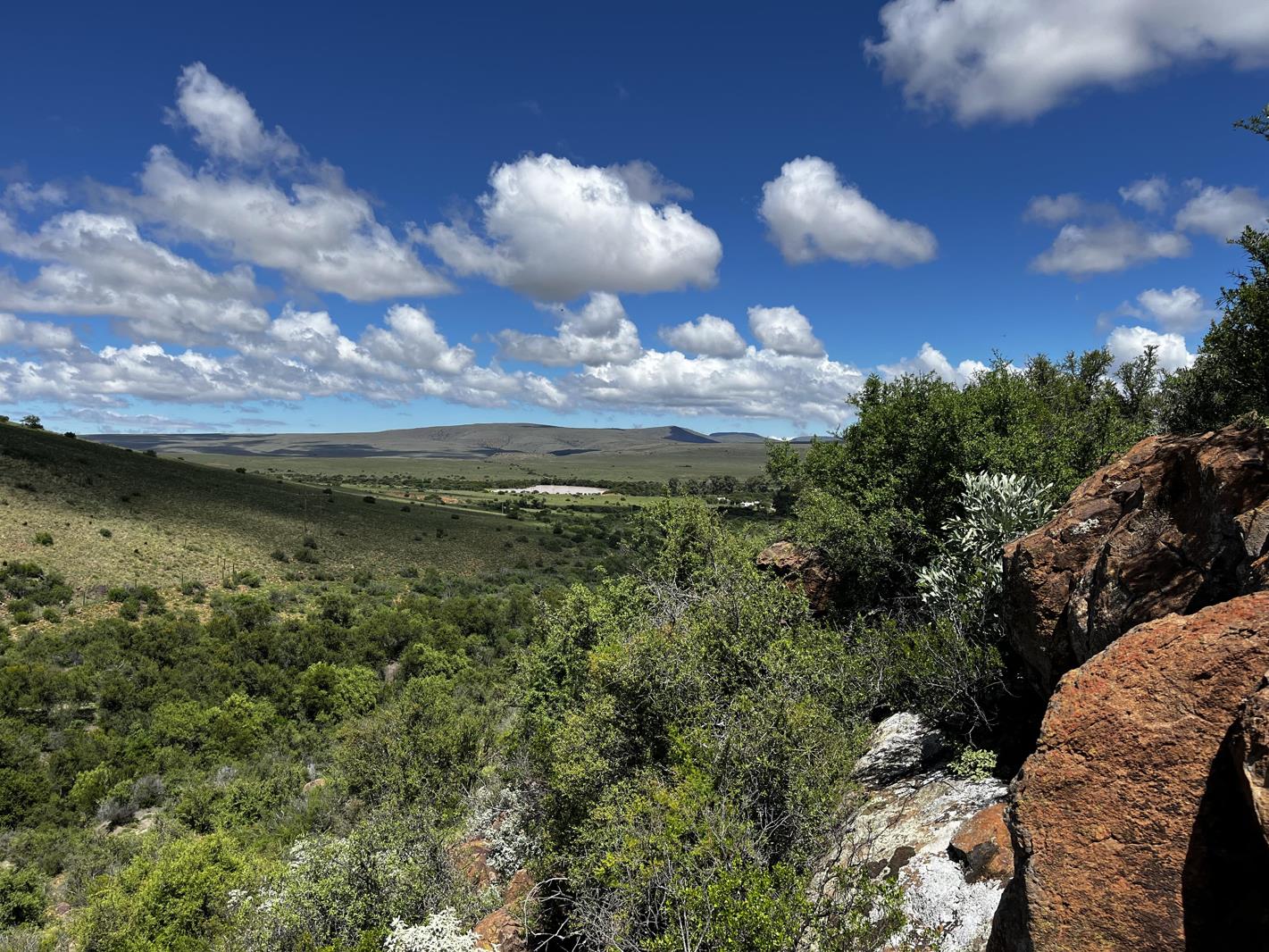
In the Sneeuberg foothills lies a tranquil retreat, with a rambling, and characterfilled homestead accompanied by charming and storied outbuildings, all nestled in a lush oasis of parklike gardens shaded by a copse of towering trees. Scenic and wellwatered, the property is a working farm with cattle, small stock, and game, while also offering tourist accommodation. It is graced by a perennial stream that forms picturesque twin cascades, tumbling over rounded volcanic rocks into clear pools within a grove of poplar trees, before winding its way down the valley. With its idyllic setting and reliable water, this farm is both an ideal lifestyle getaway and a property with strong potential for further development as a conservation or tourism destination, situated in the heart of the gazetted and protected Great Karoo Wilderness conservation area.
LOCATION: 34 km north-east of Graaff-Reinet
SIZE: 1,745.7835 ha
CARRYING CAPACITY: 13 hectares Large Stock Unit Govt. Assessment 2018 Total: 134 LSUs.
ANNUAL RAINFALL: 350 mm
TOPOGRAPHY & GEOLOGY: The property is defined by a Y-shaped configuration with a central valley floor and low ridges at elevations of 1,2801,350 m ASL. The landscape is intersected by two waterways: the upper reaches of the westward-flowing, non-perennial Broederstroom to the south, and the south-westward flowing perennial Klipkraalrivier with the double waterfalls to the north. The western arm rises to 1,458 m ASL, while the southern arm reaches a higher elevation of 1,560 m ASL. Meanwhile, the northern arm descends into an adjacent valley, terminating at 1,290 m ASL. The propertys highest point, at 1,570 m ASL, crowns the dominant cliff-topped mountain in the northern arm, where Gods Balcony provides commanding views across the entire farm. The south-facing slope below the Gods Balcony cliffs is very steep at higher elevations, creating a dramatic drop from the summit. The remaining mountain slopes are more gradual, with gentler contours easing into the central valley floor.
Dolerite is dominant at the highest elevations in the north and west. A narrow, meandering dolerite sill extends southward from the waterfalls, running just inside the eastern boundary before terminating. At lower elevations in the extreme south-west, a smaller dolerite sill is exposed, marking the varied distribution of intrusive rock across the property. The remainder of the land is underlain by Permian Balfour formation mudstones, shale, and sandstones, while the lower valley floor and areas adjacent to the river courses contain fertile Alluvium deposits of sand, silt, and gravel, reflecting periodic flooding and riverine deposition.
VEGETATION: Smaller Karoo shrubs and plants include Anchor Karoo-bush Pentzia incana, Asbos Psilocaulon sp., Australian Saltbush Atriplex lindleyi, Beeskaroo Pentzia punctate, Bergappel Asparagus striatus, Biesie Afroscirpoides dioeca, Bietou Osteospermum sp., Bitterkaroo Chrysocoma ciliate, Bloublommetjie Felicia sp., Bushmanns Candle Monsonia camdeboense, Buttercup Oxalis Oxalis pes-caprae, Cape Marigold Arctotheca calendula, Chaenostoma halimifolium, Kapokbos Eriocephalus ericoides, Gombossie Pteronia viscosa, Indigofera sp, Karoo Violet Aptosimum procumbens, Kougoed Sceletium tortuosum, Matchstick Plant Loranthus elegans, Pencil Milkbush Euphorbia mauritanica, Pigs Ear Klein Plakkie Adromischus sphenophyllus, Pigs Ear Plakkie Cotyledon orbiculata, Pteronia staehelinoides, Resurrection Fern Ceterach cordatum, Wilde Aster Felicia filifolia, Wild Asparagus Asparagus burchellii, and Yellow Mountain Mesemb Chasmatophyllum musculinum.
Larger shrubs and plants include Bitter Aloe Aloe ferox, Broom Karee Searsia erosa, Camphor Bush Tarchonanthus minor, Cancer Bush Lessertia frutescens, Century Plant Agave Americana, Common Reed Phragmites australis, Common Rush Juncus punctorius, Cross-berry Grewia occidentalis, Dogwood Rhamnus prinoides, Karoo Sagewood Buddleja glomerata, Mountain Aloe Aloe broomii, Old Man Saltbush Atriplex nummularia, Prickly Pear Opuntia ficus-indica, Renoster Bush, Dicerothamnus rhinocerotis, Sour Prickly Pear Opuntia stricta, Spike-thorn Maytenus heterophylla, and Swartstorm Cadaba aphylla.
Trees include Karee Rhus lancea, Karoo Kuni Searsia burchellii, Karoo Honey Thorn Lycium oxycarpum, Mountain Cabbage Tree Cussonia paniculate, Poplar Populus simonii, Star Apple Diospyros lycioides, and Sweet Thorn Vachellia Karoo.
Grass species include Blue Buffalo Grass Cenchrus ciliaris, Carrot-seed Grass Tragus beteronianus,
Dew Grass Eragrostis obtuse, Heart-seed Love Grass Eragrostis capensis, Mountain Wire Grass Merxmuellera disticha, Quick Grass Cynodon dactylon, Red Grass Themeda triandra, Staggers Grass Melica decumbens, Tassle Three-awn Aristida congesta, Thimble Grass Fingerhuthia Africana, Turpentine Grass Cymbopogon pospischilii, Spear Grass Heteropogon contortus, and
Weeping Love Grass Eragrostis curvula.
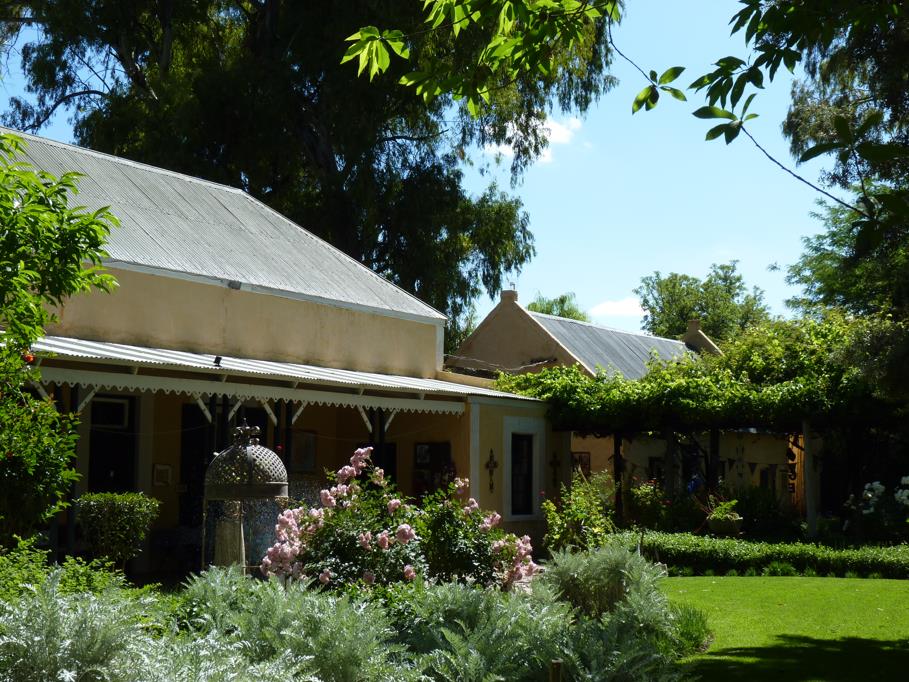
HOMESTEAD: The quintessential rambling 19thcentury Karoo homestead of 485 m2, expanded through later additions, exudes historic charm and character while showcasing a wealth of traditional features and fittings that reflect both Cape Dutch and later Victorian influences.
Cape Dutch elements include an original yellowwood and stinkwood builtin wall cabinet with solid lower wooden doors and cottagepane display doors above, an oxblood stained yellowwood ceiling, selected yellowwood and stinkwood doors, a rear Dutch stable door with glazed upper panels and large wroughtiron hinges, and yellowwood flooring.
Victorian details are evident in the elegant sash windows complemented by traditional louvred shutters on the front veranda, a castiron fireplace complemented by finely crafted Oregon pine surrounds and lintel, Oregon pine floors, both solid and glazed Oregon doors, a pair of happy doors, finely crafted door and window architraves, walls fitted with picture rails, and numerous brass doorknobs and light switches.
The homestead comprises 22 rooms, including formal and informal dining rooms, a library, office, lounge, kitchen, pantry, toyroom, linen room, sunrooms, five bedrooms, three bathrooms, and passages. Nestled within a copse of towering Blue Gum trees and surrounded by beautifully kept gardens, it offers a tranquil setting that enhances its historic charm and character.
GUEST ACCOMMODATION: The property includes a range of established guest accommodation facilities. Multiple selfcatering units are available, varying in size from compact twosleeper cottages to larger dwellings accommodating up to six guests. Each unit is equipped with essential amenities such as kitchens, bathrooms, and outdoor living spaces, with several offering braai facilities and garden areas. In addition, a rustic offgrid retreat provides a more natural experience, while a shaded campsite under thorn trees caters for visitors seeking a traditional outdoor stay. Collectively, these facilities provide flexible options for families, couples, and groups, enhancing the propertys potential for diversified guest income streams. Notably, one of the cottages stands beside the homestead and dates from the 19th century. It features a pitched roof originally thatched, with traditional whitewashed reed ceilings and solid Cape Dutch shutters, all of which reflect the historic character of the property.
OUTBUILDINGS: The farmyard includes two attractive pitchedroof sheds of differing age and construction, both roofed in corrugated iron. The first, built of stone with an adjoining leanto, measures approximately 200 m2. The second, of older limewashed stone construction, measures about 124 m2 and is currently used for storage. In addition, nearer to the old irrigated lands is another characterful stone shed originally built for drying tobacco but now repurposed as a stable. The 5 staff cottages are equipped with both electricity and running water.
FARM INFRASTRUCTURE: Approximately 996 ha of the property is almost entirely enclosed by a 2.4 m game fence, with only a small section along the northern boundary secured by a standard 1.6 m stock fence. The farm is currently subdivided into five camps, and a rudimentary internal road network allows access to most areas of the property. Basic stock-handling facilities are located near the homestead.
WATER SUPPLY: A screened river intake pipe takes water from the top of the poplar grove down the valley beyond the house and was formerly used for both stock waters and irrigation purposes. There are 4 boreholes near the house and 4 boreholes in the veld. The house supply is fitted with solar and a submersible pump and produces 27,000 litres per hour from a depth of 32 m. The property also has two large earth dams. All camps have natural waters andor drinking troughs.
IRRIGATION: 38 ha was previously irrigated by gravity from both the river and dam water.
POWER: The property operates on an offgrid solar system comprising a 5 kVA inverter, supported by 3 48V lithiumion batteries and two solar installations of 10 and 8 panels respectively. Eskom electricity is available for reconnection if required.
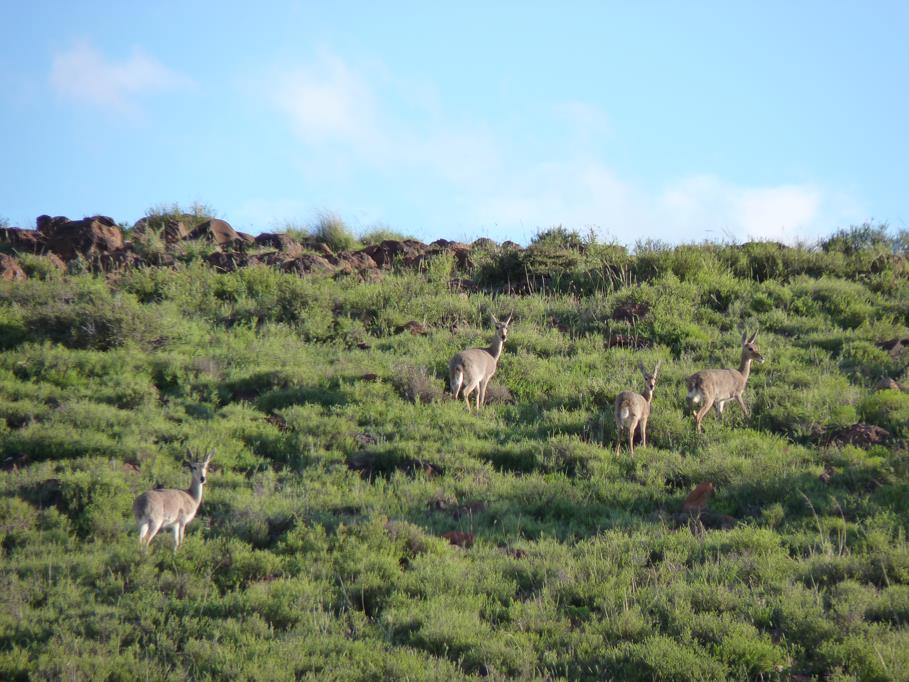
LIVESTOCK & GAME: Until recently there were 100 - 120 Nguni and Drakensberger cattle, 50 - 80 small stock, and 70 - 80 Blesbok on the property. Naturally occurring species include Kudu, Mountain Reedbuck, Grey Rhebok, Klipspringer, Steenbok, Duiker, Bush Pig and Warthog etc.
Property details
- Listing number T5555571
- Property type Farm
- Listing date 16 Jul 2026
- Land size 1 745.8 ha
- Rates and taxes R 7 803
Property features
- Bedrooms 5
- Bathrooms 3
- Lounges 2
- Dining areas 2
- Garage parking 2
- Covered parking 10
- Flatlets
- Pet friendly
- Patio
- Pool
- Staff quarters
- Study
- Pantry
- Fireplace
- Built In braai