What is meant by tax, and why it exists?
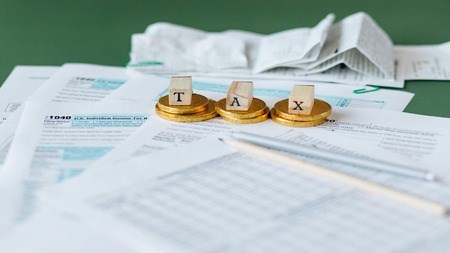
Tax is the manner in which countries generate income, and which governments use to provide services for its people. This would include, for example, the building of infrastructure, healthcare, housing, communications, safety and security like the police force and border protection, and yes income for government employees.
Taxes are collected and paid by the South African Revenue Services (SARS) into the National Revenue Fund.
Dawie Roodt, Chief Economist at Efficient Group, explains that essentially, “the philosophy behind tax is that the government uses those taxes to create an environment in which you are safe to generate an income.”
Types of tax
There are many ways the government taxes people and companies, all of which are governed by various laws and regulations.
These are the top three tax types:
Income tax (current tax): This is a government’s main source of income. There are various tax brackets that define how much tax an earning individual pays: the more you earn (such as through a salary) the more tax you will pay. When you are given a salary increase that takes you into a higher tax bracket, you should still take home more money.
VAT: The government’s second biggest source of income is Value-Added Tax. Currently South Africans pay 15% tax when they purchase certain goods and services. Education is VAT-exempt but school books and uniforms aren’t for example. White flour, maize meal, rice, brown bread are also VAT-exempt because these are seen as basic food items on which the poverty-stricken and poor depend for nutrition.
Capital gains tax (CGT): Along your life journey, it is assumed that you will acquire property or some sort of asset, which is likely to appreciate in value as time goes by. When the time comes to sell that asset, 40% of the capital gain is included in your taxable income, and then taxed at your marginal income tax rate. The maximum effective CGT rate for individuals is about 18%. There is an important exclusion: the first R2 million of the capital gain from the sale of your primary residence is exempt from CGT. For example: If you bought a house in 2001 for R500 000 and sold it today for R1.8 million, your capital gain would be R1.3 million (R1.8 million minus R500 000). Because this is below the R2 million primary residence exclusion, you won’t pay any CGT. If, however, you sold the property for R3 million, your capital gain would be R2.5 million (R3 million minus R500 000). After deducting the R2 million primary residence exclusion, the remaining R500 000 would be subject to CGT. Of that amount, 40% (R200 000) would be included in your taxable income. Additionally, you can apply the annual R40 000 exclusion, further reducing your taxable amount.
The difference between current and capital taxes?
This is where things become a little murky. You need to bear in mind what Roodt said about the authorities using taxes to create a safe environment to generate an income. “Within this environment, you are also acquiring property or capital. In effect, the principle is that there is no difference between capital appreciation and current tax (salaries, for example) because they are all acquired through the so-called safe income-generating environment.
“The argument is that South Africans are NOT living in an ideal environment,” says Roodt. “We have high levels of inflation, which pushes prices up, and this should be catered for through your income increases. You’ll pay more tax as you move into higher tax brackets, bearing in mind that these brackets are reviewed regularly and adjusted for the current economic environment. But, and this is the kicker, inflation increases as the value of capital is realised.”
The argument against CGT and the amount of CGT is, therefore, founded on inflation. “Inflation determines how we live, and what we can afford. While most taxes are adjusted to align to the inflation of the time, capital gains are not, however, even though there are concessions, and exclusions, to ensure that those who buy a house to live in (their primary residence) have some relief.”
In effect, this means we have a form of double taxation … we pay tax on our income, and then a further tax — 40% of any capital gain is added to your taxable income, and taxed at your marginal rate, with a maximum effective rate of 18%.
If CGT was lowered or did not exist
If the percentage of CGT was lowered, those that have realised appreciation from a sale of a capital asset like a property will simply keep their money, save it or invest in other investments, which is good for the country’s economic growth. “Mauritius does not apply CGT,” says Roodt, “which makes it a popular investment destination for those South Africans who don’t want to pay what they consider an ‘unfair’ tax.”
Foreign investment is good for any economy, and in a developing nation, it can be a significant positive to changing the circumstances of the average citizen. CGT stifles this potential growth.
Review
To reiterate: If you own a property as your primary residence, the first R2 million of any capital gain from the sale of that home is exempt from CGT. Any amount gained above this R2 million threshold will be subject to CGT, with 40% of that amount included in your taxable income, taxed at your marginal rate — up to a maximum effective rate of 18%.