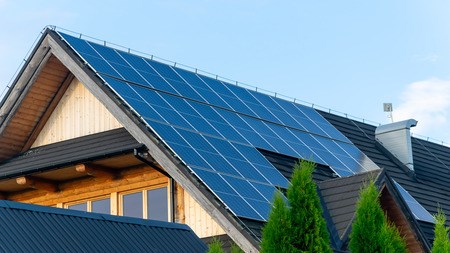
Solar is an attractive offering to any home, but buyers need more than a list of panels and batteries before taking ownership.
Solar PV systems have become an increasingly attractive feature of South African homes, particularly as households seek greater energy security and protection against rising electricity costs.
But, for a buyer, a solar installation should be treated as more than a desirable extra. It is electrical infrastructure forming part of the property, and its compliance, documentation, and registration can have implications for safety, insurance, maintenance, and the future sale of the property.
According to the Electrical Conformance Board (ECB), buyers should establish exactly what has been installed, who installed it, and whether the appropriate documentation exists.
Start with the CoC
“A solar installation constitutes electrical installation work and should have an Electrical Certificate of Compliance (CoC),” says Dr Martin Muller, director of the ECB.
“Whenever electrical installation work is carried out on a solar installation, a new CoC should be issued. This might be the addition of batteries or photovoltaic (PV) panels, or the replacement of, or new installation, of a new inverter.”
This means a buyer should not simply accept an ‘old' CoC covering the original solar electrical installation as proof that a solar system is compliant, which is why the ECB advises buyers to establish whether any alterations have also been approved.
This is particularly important for buyers because an electrical CoC should not be interpreted as a 'blanket certification’ of every structural-related aspect of a solar installation.
New documentation
For solar installations issued after June 2026, the ECB says a maintenance manual should also be provided by the installer, in line with IEC 62446-1:2018, which is an international standard that sets the rules for testing, inspecting, and documenting grid-connected solar power systems. “However, because this standard has not yet been published by the South African Bureau of Standards (SABS), there may be a short delay before electricians are able to fully comply with this requirement,” says Muller.
A maintenance manual is particularly valuable to new owners after transfer because it provides information about the system and its ongoing maintenance requirements.
The solar roof
The electrical compliance certificate is not the only professional certification that may be important. The exact requirements depend on the nature of the installation. “Where solar equipment is installed on a roof, for example, a structural engineer may need to certify that the roof can carry the additional load,” says Muller.
In areas where excessive wind is usual, there may also be structural implications that need to be assessed.
Arching is yet another consideration. Electrical arcing (or an arc fault) in a solar system is a dangerous discharge of electricity that jumps through the air between two conductors. It creates intense heat and light, often exceeding 1,000°C, which can melt metal and ignite nearby roofing materials or solar components. Where arcing could create a fire risk, the ECB says a civil engineer may be required to certify the fire ‘withstand time’ of the installation.
Municipal registration
Grid-connected solar installations are another layer of compliance. The Electricity Regulation Amendment Act 38 of 2024 came into operation on 1 January 2025, amending the regulatory framework governing South Africa's electricity sector.
Registration of a solar installation physically connected to the electricity grid forms part of this regulatory framework. Municipalities have a responsibility to ensure that their networks are properly provisioned and safe, making registration an important part of managing distributed generation on those networks.
However, there remains an implementation issue: according to the ECB, the National Energy Regulator of South Africa (NERSA) has yet to provide municipalities with the guidance needed on how registrations should be undertaken. This means buyers should establish the position with the relevant municipality rather than assuming that every solar installation has followed an identical registration process.
Inspections
There is currently no legal requirement for a buyer to have a solar installation independently inspected before taking transfer as the solar system forms part of the fixtures of the property. Deciding whether to commission an inspection is, therefore, at the buyer's discretion, but the cost of this should be weighed against the potential cost of repairing or replacing a defective system. It may be worth considering if:
- The solar system is substantial.
- The installation is relatively old.
- There is no clear record of who installed it, or documentation is incomplete.
- Batteries, panels, or the inverter have subsequently been added.
- Roof-mounted equipment appears extensive.
- The buyer intends to rely heavily on the system after moving in.
Before making an offer
Before signing off on a property with solar, buyers should ask these questions:
- What is included? Confirm the panels, inverter, batteries, mounting equipment, and associated electrical equipment is being sold with the property.
- Is there a CoC? Ask for the certificate and its test report.
- Has the system been modified? Additional panels, batteries, or a replacement inverter may mean further electrical installation work has been undertaken.
- Is there a maintenance manual? For installations issued after June 2026, ask whether there is a maintenance manual.
- Does the roof have appropriate certification? This applies where a substantial PV system is installed.
- Is the system registered with the relevant municipality? If applicable, ask for evidence of registration or correspondence proving registration.
- Who installed the system? Ask for installer details, warranties, manuals, and maintenance records.
- What happens to warranties after transfer? Confirm whether the solar equipment warranties are transferable to the new owner.